Wednesday, May 7, 2014

When a Bad Golf Course Edges Into Goodness

 
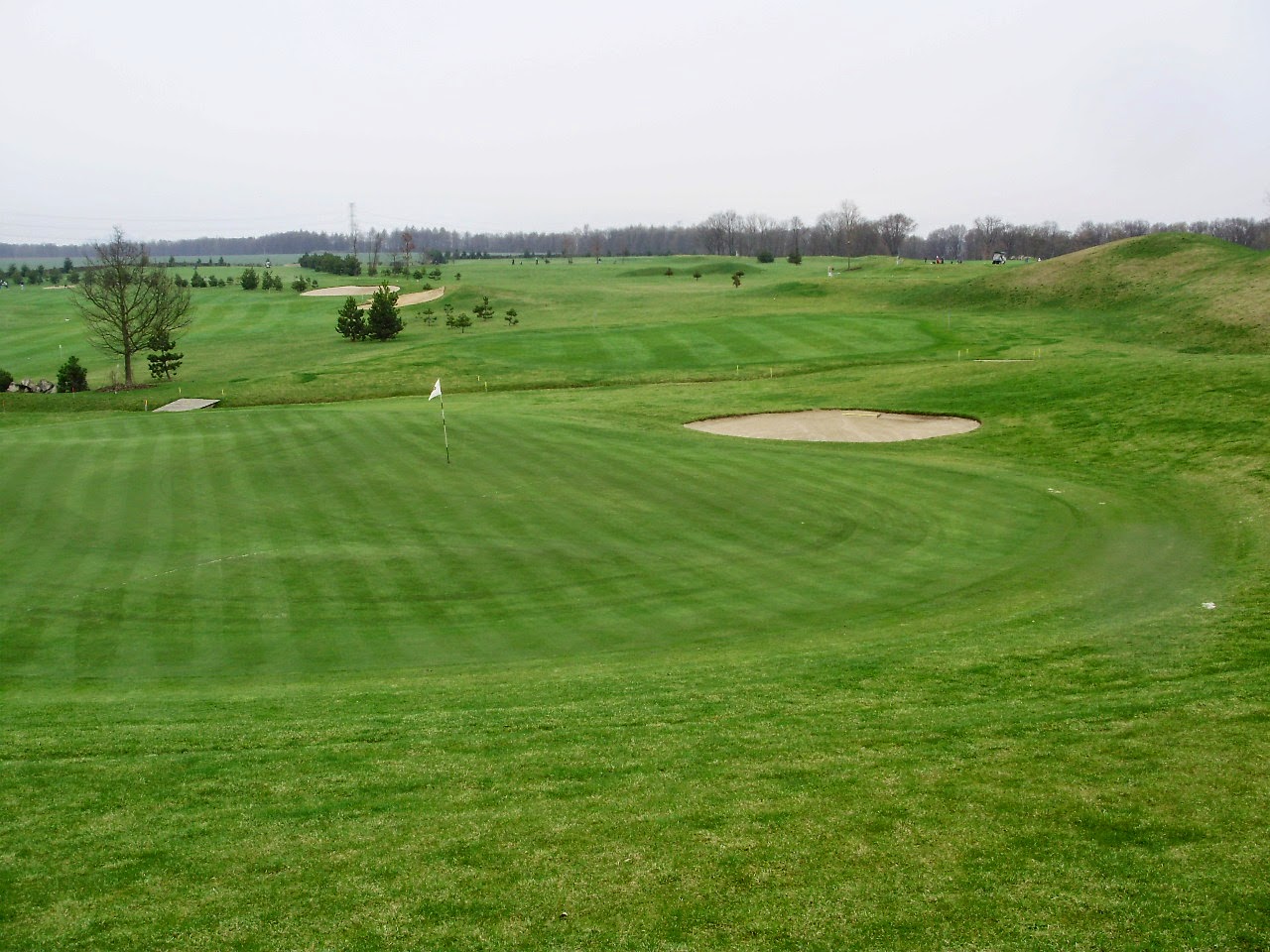
There is no such thing as a really terrible golf course. If you’re playing golf on it, how awful can it be? But if some courses are indisputably better than others, then inevitably, some are worse. Quite a bit worse, in my experience. So bad that they’re worth a detour — if only because they make you grateful for the other better kind.
Worseness is not necessarily a matter of maintenance, or the lack of it. One of the best courses I’ve ever played is Auchnafree, which was laid out by a shepherd, John Pollock, in a glen in Perthshire, Scotland. The cups were tin cans, and the groundskeeping crew consisted entirely of sheep, who took care of the mowing and the fertilizing. On the other hand, I have played resort courses so lush, so perfectly kept up, that they feel a little soporific and unnatural, with the fairways spooling away as if from rolls of Astroturf.

Like greatness in a golf course, worseness starts with terrain. I spend a lot of time in southeastern Massachusetts, on the Rhode Island border: a stretch of landscape that a friend has called the Bermuda Triangle of New England. For some perverse reason, the land there — stony, boggy, sandy, full of scrub pine and poison ivy — has given rise to a surprising number of little nine-holers. Some are unmemorable, a couple are just plain lousy, but a few have some genuine distinction. They’re bad in good ways — or at least unusual ones.
NYTimes Blog

Donut Golf


Friday, April 25, 2014

Friday, April 11, 2014

Friday, March 21, 2014

More Distance, Softer Feel, Starts Fires . . .

The scientists recreated the conditions on the days of the fires in their lab. They used high-speed video cameras and “powerful scanning electron microscope analysis” which showed that when the titanium clubs struck or grazed a hard surface, very hot sparks were produced. The sparks were up to 3,000 degrees and lasted up to one second. When they used stainless steel clubs, there were no sparks.
Chemical engineering and materials science professor James Earthman said:
“Rocks are often embedded in the found in these rough areas of dry foliage. When the club strikes a ball, nearby rocks can tear particles of titanium from the sole of the head. Bits of the particle surfaces will react violently with oxygen or nitrogen in the air and a tremendous amount of heat is produced. The foliage ignites in flames.”


Saturday, March 15, 2014

the unfinished symphony of Roy McAvoy

Roy 'Tin Cup' McAvoy: Well, I tend to think of the golf swing as a poem.
Clint: Ooh, he's doing that poetry thing again.
Roy 'Tin Cup' McAvoy: The critical opening phrase of this poem will always be the grip. Which the hands unite to form a single unit by the simple overlap of the little finger. Lowly and slowly the clubhead is led back. Pulled into position not by the hands, but by the body which turns away from the target shifting weight to the right side without shifting balance. Tempo is everything; perfection unobtainable as the body coils down at the top of the swing. Theres a slight hesitation. A little nod to the gods.
Dr. Molly Griswold: A, a nod to the gods?
Roy 'Tin Cup' McAvoy: Yeah, to the gods. That he is fallible. That perfection is unobtainable. And now the weight begins shifting back to the left pulled by the powers inside the earth. It's alive, this swing! A living sculpture and down through contact, always down, striking the ball crisply, with character. A tuning fork goes off in your heart and your balls. Such a pure feeling is the well-struck golf shot. Now the follow through to finish. Always on line. The reverse C of the Golden Bear! The steel workers' power and brawn of Carl Sandburg's. Arnold Palmer!
Romeo Posar: Unnhh, he's doing the Arnold Palmer thing.
Roy 'Tin Cup' McAvoy: End the unfinished symphony of Roy McAvoy.


now, I hate, Hate, HATE the end of Tin Cup where he hits 5 balls into the water hazard, going for the par5 green in 2, dumbass . . . but I love, Love, Love this spiel, the unfinished symphony of Roy McAvoy, and, of course, Rene Russo . . .